
Episode 3
What Happens If You Fire Someone the Wrong Way?

Business • Management • 10 episodes
Up In Your Business
Latest episode
Show notes
Up In Your Business with Jason Randall is a podcast for business leaders navigating the real challenges of running and growing a company.
Each episode dives into the issues that matter most to employers today—from HR and compliance to benefits, leadership, culture, and day-to-day operational decisions. The goal is simple: give you clear, practical insight you can actually use.
Hosted by Jason Randall, the show brings straightforward conversations, real-world perspectives, and expert guidance to help you make smarter decisions for your business and your people.
Whether you're scaling your team, managing change, or trying to stay ahead of what’s next, this podcast is built for you.Why Organizational Culture Is a Strategic Driver of Business Growth (#9)
25 min
Customer Experience as a Growth Strategy: The Hidden Profit Signal Business Leaders Can't Ignore (#8)
34 min
Why Clarity Breaks First in Rapid Business Growth (#7)
33 min
What Does a PEO Actually Do and Do You Need One? (#6)
33 min
More episodes
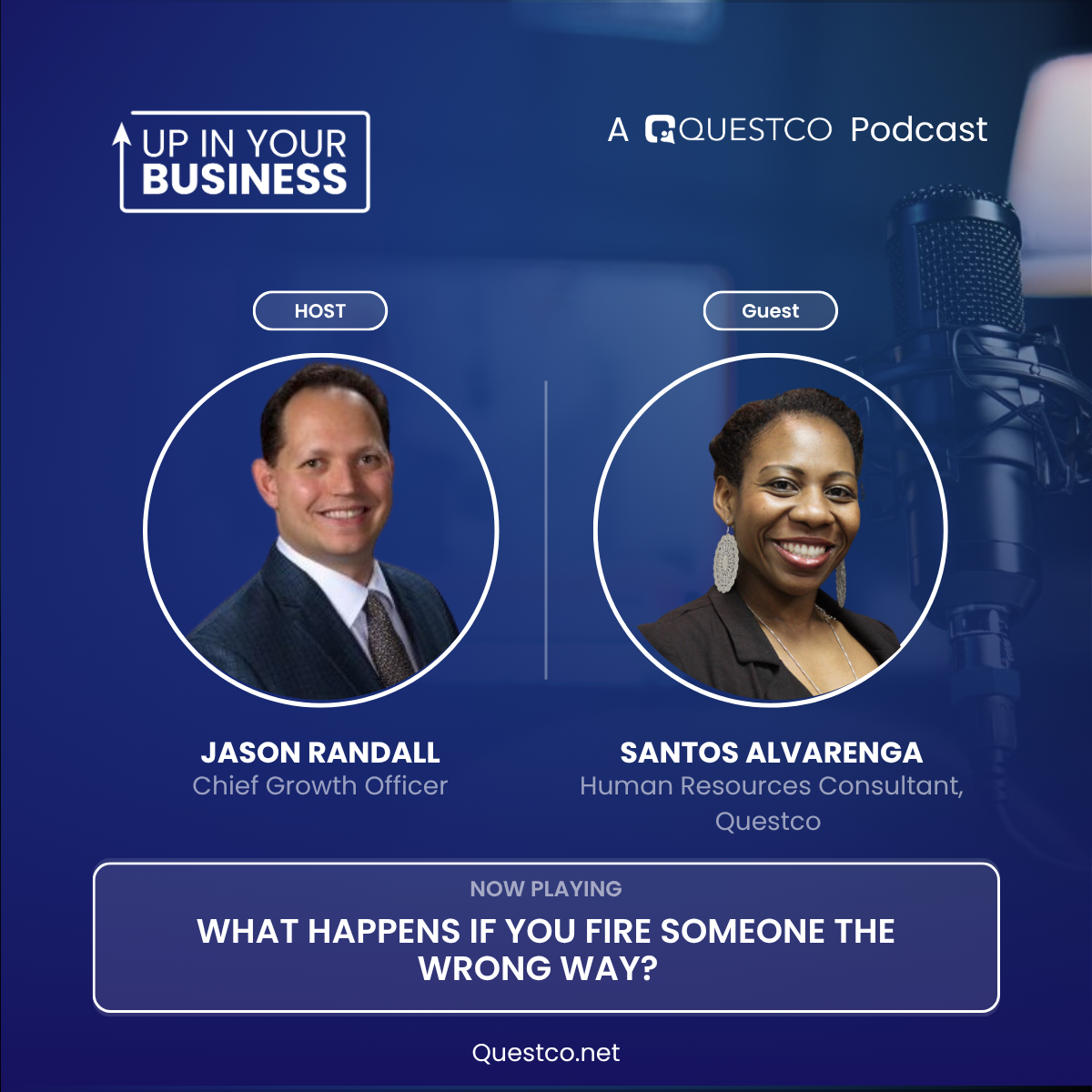
Firing someone the wrong way can create more risk than the original employee issue. In this episode of Up In Your Business, host Jason Randall sits down with Santos Alvarenga, Human Resources Consultant at Questco, to talk through what leaders often misunderstand about termination risk, documentation, at-will employment, and the role HR should play before a final decision is made.
Santos’s main point is direct: a bad termination rarely starts in the termination meeting. It usually starts much earlier, when performance concerns are noticed but not documented, policies are applied inconsistently, or managers avoid difficult conversations because they do not want to be the “bad guy.”
The conversation covers why “at-will” does not mean “risk-free,” what good documentation actually looks like, how inconsistent policy enforcement can create problems, and why the cleanest terminations are often the ones employees can see coming because expectations were made clear along the way.
What You'll Learn in This Episode
-
Why at-will employment does not remove termination risk
-
Where termination problems usually begins
-
Why managers delay performance conversations
-
What good documentation should include
-
When to use a write-up, follow-up email, or performance improvement plan
-
How inconsistent policy enforcement can create legal and administrative exposure
-
Why emotional termination decisions often lead to trouble
-
What should happen during the actual termination conversation
-
Why HR should be involved before the decision is already in motion
-
How state laws, final pay rules, and termination notices can affect the process
-
The one thing leaders should do first when a termination may be coming
• 28 min
What Happens If You Fire Someone the Wrong Way? (#3)
Up In Your Business
Play
Want to follow the conversation? Subscribe to receive updates on new episodes, or click the feed to listen on your preferred platform.
Meet Your Featured Guest
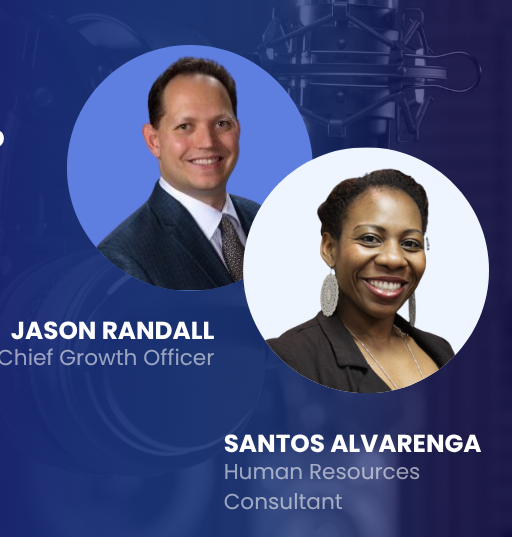
Santos Alvarenga
Santos Alvarenga is a Human Resources Consultant at Questco Companies, holding both PHR and SHRM-CP certifications. He advises small and mid-sized businesses on HR strategy, compliance, and people practices, drawing on prior experience as an HR Generalist at NOV and G&A Partners. His background spans HR generalist functions across multiple industries, with a particular focus on helping employers navigate risk before it becomes a liability.
Selected Questions from the Episode
Why doesn’t at-will employment eliminate termination risk?
At-will employment gives employers flexibility, but it does not mean a business can fire someone without consequences. Santos explains that many leaders assume at-will employment means they can terminate an employee for almost any reason and face little risk. The problem is that employees can still bring claims after being terminated, especially if they believe the decision was retaliatory, discriminatory, inconsistent, or connected to a protected issue. If the company does not have concrete documentation showing why the termination happened, it may spend months defending a decision that could have been much easier to explain.
Where does termination risk usually begin?
Termination risk usually begins long before the final conversation. Santos says the problems often start “at the beginning,” when a manager notices that an employee may not be working out but does not document the issue, start a disciplinary process, or put expectations in writing. That delay creates a gap. The business may know internally why the employee is being terminated, but if the file is empty, the company has little to point to if the employee challenges the decision later.
Why do managers avoid documenting performance issues?
Managers often avoid documentation because they do not want to be the bad guy. Santos makes the point that the manager-employee relationship requires communication. If an employee is not meeting expectations, avoiding the conversation does not help them. It leaves the employee unclear, the manager frustrated, and the company exposed if termination later becomes necessary. The better move is to address the issue early, clearly, and in writing.
What does good documentation actually look like?
Good documentation explains the issue, the expectation, the follow-up, and the possible consequence. Santos distinguishes between weak notes and useful documentation. “I spoke with the employee” is not enough by itself. The employee needs to understand what happened, what needs to change, and what may happen next if the issue continues. Good documentation may include:
-
A follow-up email after a coaching conversation
-
A written disciplinary form
-
A performance improvement plan
-
Attendance records
-
Notes from prior conversations
-
A clear explanation of next steps
The format matters less than the clarity. A written record should show that the employee knew where they stood.
How does inconsistency create risk?
Inconsistent policy enforcement makes a termination harder to defend. If one employee is fired for being late once, but other employees are routinely late without discipline, the decision can look selective. If a company has a policy but only enforces it when leadership is frustrated with a specific employee, the policy may not protect the business as much as leaders think it does. Santos shares an example of a company that wanted to terminate an employee based on vague concerns and inconsistent reasoning. The stated reasons kept changing, and some of the reasons were not treated as terminable offenses for other employees. That is where HR guidance becomes especially important. The question is not only “Can we terminate?” It is also “Can we explain why this decision is consistent with how we handle similar situations?”
What should happen during the termination conversation?
The termination conversation should be clear, controlled, and supported by HR. Santos recommends having both the manager and an HR professional present. A manager should not handle the meeting alone. The second person helps keep the conversation focused and provides a witness to what was said. The amount of detail depends on the situation. For attendance issues, it may be appropriate to reference dates and prior warnings. For a serious misconduct issue after an investigation, less detail may be better. The goal is not to debate the decision. The goal is to communicate it clearly and professionally.
When should HR get involved?
HR should get involved as soon as a leader thinks termination may be coming. Santos is especially clear on this point. HR can help review documentation, assess risk, check state-specific requirements, prepare for final pay obligations, and determine whether any termination notices are required. Even when the decision seems straightforward, the process still matters. Termination rules can vary by state, and missed procedural requirements can create avoidable complications.
Timestamps
[00:00] Welcome to Up In Your Business
[00:01] Why firing someone is one of the hardest things leaders do
[01:04] Santos Alvarenga’s background in HR
[03:19] What leaders usually assume about termination risk
[03:40] Why at-will employment can create a false sense of security
[04:02] How a termination can lead to months of defense without documentation
[05:24] Why termination problems often begin at the beginning of employment
[06:28] Why managers avoid difficult performance conversations
[08:33] What strong managers do early with 30-, 60-, and 90-day check-ins
[09:51] Why performance issues need a paper trail
[10:38] Claims that can arise after a poorly supported termination
[12:00] What good documentation actually looks like
[14:47] Why verbal conversations are not enough without written follow-up
[16:53] How inconsistent policy enforcement creates risk
[17:39] A real-world example of a vague and risky termination request
[19:21] How offhand comments can complicate a termination decision
[20:15] What happens when leaders act emotionally or skip steps
[23:47] What should happen in the termination meeting
[24:46] When “less is more” during the final conversation
[26:25] Why leaders should call HR before moving forward
[26:58] State laws, final pay, termination notices, and risk assessment
[28:47] Why there is no perfect “golden time” to terminate
[30:20] The first thing leaders should do when termination may be coming
[31:28] Where to connect with Santos
[32:12] Closing thoughts and outro
Notable Quotes
“At-will employment does not mean there are no repercussions.” — Santos Alvarenga
“If it has to do with performance, there has to be a paper trail.” — Santos Alvarenga
“If there is no paper trail, then why are we getting rid of that employee?” — Santos Alvarenga
“You’re doing them a disservice if you’re not telling them.” — Santos Alvarenga
“Consistency means you talk to the employee, you write it up, or you send a follow-up email.” — Santos Alvarenga
“The termination should not be a shock to the employee.” — Santos Alvarenga
“Start documenting where that employee is, what the issue is, and start documenting.” — Santos Alvarenga
“What is documented gets defended.” — Jason Randall
A Questco Podcast:
Up In Your Business
Up In Your Business is a podcast for business leaders who are in it every day. Making decisions, managing people, and figuring out how to grow without losing control of what matters.
This isn’t theory or surface-level advice. Each episode tackles the real challenges leaders face, from navigating HR and compliance to building strong teams, improving performance, and making smarter operational decisions. The focus is on what actually works in the real world, and what doesn’t.
If you’re responsible for driving results while also taking care of your people, this podcast gives you practical insight you can use right away.

Meet Your Host
Jason Randall
Jason Randall served as CEO of Questco, a Houston-based HR outsourcing company known for its can-do spirit and award-winning customer service, beginning in 2018. Today, as Chief Growth Officer, he continues to bring a practical, business-first perspective to the conversations shaping today’s workplace.
On Up In Your Business, Jason explores the real challenges leaders face every day—balancing people, performance, compliance, culture, and growth. His approach is grounded, straightforward, and focused on what actually works.
With an emphasis on clarity and real-world application, Jason leads conversations that cut through complexity and give business leaders the confidence to make smarter decisions.

Read Full Transcript
Jason Randall [00:01]:
Firing someone is up there with the hardest things leaders have to do. It’s emotional. It’s uncomfortable. And when it’s handled poorly, it can create a much bigger problem than the performance issue or business issue that led to the decision in the first place.
Most of the time, the risk is not just in the termination itself. It’s in what happened before it. Weak documentation, inconsistent expectations, unclear policies, rushed decisions, or managers trying to handle a serious issue without enough guidance.
So in this episode, we’re going to cover what actually happens when a company fires someone the wrong way and what leaders can do to protect the business without turning every people issue into a paper-pushing nightmare.
With that, I’d like to welcome Santos Alvarenga to the party. Santos, you are a wonderful HR leader, a leader within our HR services organization, and a senior HR consultant. Welcome to the conversation.
Santos Alvarenga [01:02]:
Thank you, Jason. Thank you for having me.
Jason Randall [01:04]:
My pleasure. Beyond that mouthful of a title and role, could you tell us a little bit about yourself and your background?
Santos Alvarenga [01:13]:
I originally went to college for accounting because I do love math, but my first year in college, I realized I couldn’t do accounting anymore. So I actually got my degree in human resources management.
I did not go into the profession until a couple of years later, but since then, I have been in the human resources field for years now, and I’ve been with Questco for eight years.
Jason Randall [01:42]:
So that’s a lot of time, a lot of issues, and even a little math here and there, right?
When leaders think about firing someone, what do they usually assume the risk is?
Santos Alvarenga [03:19]:
Leaders feel like there is no repercussion. They feel like there are no repercussions for their actions. And if there is a repercussion, they think it’s not going to impact their business.
Jason Randall [03:31]:
In other words: “The buck stops with me. I can do whatever I want to run this place. Maybe I’m in an at-will state, so that’s my will. We’re going to fire them.” Right?
Santos Alvarenga [03:40]:
That is correct. For the most part, they feel like it is an at-will state and they can just do whatever they want.
Like I said, they feel like there are no repercussions for their actions. And if there are repercussions, they think it only impacts unemployment and it just stops right there.
Jason Randall [03:58]:
So what do they have wrong about that, just fundamentally?
Santos Alvarenga [04:02]:
What’s wrong with that is that an employee can sue them. That’s the part. An employee can sue you.
An employee can sue you and not even have evidence. An employee can make up a lie about a company, and if that company doesn’t have concrete evidence as to why they terminated that employee, that can lead to months and months of that company defending its position as to why they terminated that employee.
Jason Randall [04:34]:
So this is interesting. Like a lot of assumptions, it begins with things we might know a little about and extends to things we know very little about.
One thing we’re identifying early on here is that just because there might be a general state of at-will employment, that doesn’t mean employers can do whatever they want without consequences.
We’re here today to talk about what those consequences are, but more importantly, how leaders can go the other direction and minimize the consequential things that can happen.
So what you’re articulating is that a leader might assume the risk is pretty minimal. “I can kind of do whatever I want.” But I’m guessing that a lot of the problems related to terminating an employee don’t begin with that actual final conversation. They begin much earlier.
Where do these problems usually begin?
Santos Alvarenga [05:24]:
At the beginning. As soon as you hire somebody.
Like I tell all my leaders, as soon as you hire somebody, usually a manager can identify whether an employee is going to work out or not. They usually know whether that employee knows the work and whether that employee is going to work out.
Nine times out of ten, a manager will tell me, “I knew from the beginning.”
Okay, well, if you knew from the beginning, why didn’t you write up that person? Why didn’t you start the disciplinary process? Why didn’t you put that employee on a PIP? Why is it that a year from now, you want to terminate that employee?
Why didn’t you reach out to me? Why didn’t we write up that employee? And now you want to terminate that employee, we have no paperwork, and you want to terminate them.
Jason Randall [06:11]:
You’re hitting on something powerful because we know on some level that might have been the wiser thing to do.
In your view, why does that happen? Why do so many operators wait so long to get structured about the conversation around a performance issue?
Santos Alvarenga [06:28]:
Because they don’t want to be the bad guy. They don’t want to be viewed as a bad guy. They don’t want to discipline the employee. They don’t want to tell their employee that they’re doing a bad job.
To me, the relationship between an employee and a manager is truly a relationship. Maybe I view it as a marriage. There has to be communication. In order for it to work, you have to be able to tell that person whether they’re doing it right or wrong.
You’re doing them a disservice if you’re not telling them.
That’s where most managers fail. They fail in telling their employees that they’re doing a bad job. That’s why sometimes a termination is a shock to the employee. And some employees will retaliate. They retaliate by filing claims against the company. Sometimes they may have proof against the company as to why they feel retaliated against.
Jason Randall [07:35]:
It all starts with a really human impulse on the part of that leader. “I don’t want to have a tough conversation. I don’t want to ruin the vibe. I don’t want to ruin the friendship.”
The first thing we want to acknowledge is that you’re actually doing a kindness to the affected employee, as well as to the company you’re managing, when you have that tough conversation early.
So it starts with mindset before we get into behavior. Is that fair?
Santos Alvarenga [07:56]:
That’s correct. That is correct. It’s their job, to be honest with you. It is their responsibility.
Jason Randall [08:06]:
In contrast, when we have a healthy functioning situation, what do you see happen as soon as an employee is hired? Whether there’s good or bad performance, what are the best-in-class managers doing with their new employees?
Santos Alvarenga [08:33]:
They’re doing what’s called the 30, 60, 90. I feel like companies that are very successful are doing the 30, 60, 90. Or they’re coaching their employees.
They are engaging with those employees to make sure the employees understand the job they were hired to do. They make sure the employee has a full understanding and comprehension of what they were hired to do.
Jason Randall [09:05]:
So the good behavior starts early with clarity, consistent communication, and things that are physically documented, not just verbally communicated.
Let’s go back to what actually goes wrong here, because I think there’s a lot that we might identify in ourselves. Certainly, I’ve been guilty as a manager of not always eating my Wheaties and doing the right things, so it’s helpful to walk these things through.
Let’s suppose the decision is made that we need to part ways with an employee. It’s not related to a layoff. It’s related to a business condition or a performance conversation.
What are the biggest mistakes you see at that point?
Santos Alvarenga [09:51]:
The biggest mistake I see at that point is that there is no documentation, especially when it has to do with performance.
If it has to do with performance, there has to be a paper trail. If there is no paper trail, then why are we getting rid of that employee?
Jason Randall [10:12]:
Have you ever consulted a client where they say, “Santos, I want to get rid of this person,” and you say, “All right, we’ll deal with that. What can you tell me about the situation?” And then crickets. Nothing’s there.
Santos Alvarenga [10:23]:
Yeah, I’ve dealt with that multiple times. There is nothing there, and it’s crickets.
The client proceeds with it, and the employee comes back, and now there’s a claim we have to deal with.
Jason Randall [10:35]:
What are some of the claims that can be made in that context?
Santos Alvarenga [10:38]:
Retaliation. Or the client was not candid with me, and the employee was dealing with a leave of absence that was not disclosed to me at that time.
Or the employee had issues with that manager that were not disclosed to me. Or the employee already disclosed something to the leadership of the company that was not disclosed to me.
There are so many facets that may not be disclosed to me as your consultant. Then they want to get rid of that employee, and they want to tie it to performance. And then it comes back on the company, especially if the company is a big company.
Jason Randall [11:30]:
You said several times, “undisclosed to you.”
Have you seen situations where the employer says, “Hey, yeah, I’m documenting stuff, Santos. It’s here, and I think it’s good documentation,” but from your view as a skilled HR practitioner and advisor, the documentation isn’t actually good at all?
What are businesses getting wrong about what good documentation actually looks like in practice?
Santos Alvarenga [12:00]:
First, they’re not documenting at all.
For some of them, their documentation says, “I spoke with the employee.” Okay, you spoke with them, but do they understand the expectation? Did you follow up via email? Do they truly understand the consequences of what’s going to happen next?
That’s good documentation.
I’m not saying you always have to write up the employee. You can send a follow-up email to the employee so they actually understand the consequences going forward. That’s good documentation. We have a paper trail.
The other documentation would be an actual write-up or a disciplinary form.
Another form of documentation is a performance improvement plan. If the employee is not doing what they’re supposed to do, and I’m not referring to behavior, because behavior to me is different. With behavior, you can have a disciplinary action plan and tell the employee, “Hey, if you’re late again, we’re going to move to the next step, which will be a warning.”
But a performance improvement plan is based on work performance. If you’re making mistakes that you should not be making, that should be on a performance improvement plan.
Those are really great forms of documentation.
Jason Randall [13:30]:
What I heard is that there are some attributes of good documentation. It has to be specific. It has to be comprehensive. It has to be consistent. And it needs to be actionable.
You’re capturing all aspects of the situation, not just writing some things down or making vague notes, but following a process and doing that over time consistently.
Santos Alvarenga [13:58]:
That is correct.
Jason Randall [14:04]:
Let’s say I’m not consistent as an operator. I might have some detailed notes from seven months ago and some chicken scratch from two days ago.
How does consistency play into our ability to move forward more smoothly with a termination?
Does it enable a manager to say, “Hey, we talked about this two months ago and then again 30 days ago,” so there are fewer surprises because we’ve been following practices over time?
Santos Alvarenga [14:47]:
It does in one way.
But if a manager is talking to an employee and still not documenting it, how can you prove as a manager that you’re having those discussions with the employee? How can we, as a company, defend that manager if that employee comes and files a claim against the company?
Where is the documentation? Where is the proof?
If that employee comes back and says, “He didn’t talk to me about it,” then it will be your word versus that employee’s word.
So yes, if you spoke with the employee seven months ago and then spoke with the employee two months ago, that is consistency in one sense. But to me, it is still inconsistent if it is not documented.
Consistency means you talk to the employee, you write up the employee, or you send a follow-up email. Then you talk to the employee again two months later and send another follow-up email. That’s proof that you spoke with the employee.
Then maybe in the third email, after you’ve spoken with the employee, you tell them, “If this happens again, we’re going to move to the next process, which may be termination, because we’ve already spoken multiple times.” And you copy HR on that email.
To me, that is consistency.
Jason Randall [16:18]:
So frequency, in addition to consistency, plays a role here.
This assumes the policy itself is consistent and clear and consistently enforced. Do you see issues with that? Maybe on a PTO issue or a workplace conduct situation where there might be a policy, but it might not be well understood by the employee, or they claim it’s not well understood.
How is that situation a risk hotbed if I don’t have a consistent policy or I’m not enforcing it consistently?
Santos Alvarenga [16:53]:
That is an extreme issue.
If the company has a policy and they’re not enforcing it consistently, or they’re enforcing it here and there, that’s a problem. It has to be enforced consistently throughout the company.
Jason Randall [17:16]:
Do you have any stories from the trenches about a policy not being enforced consistently, and then suddenly it becomes a mess when we’re trying to move one step further and separate from the employee?
Santos Alvarenga [17:39]:
I had a client reach out to me wanting to terminate an employee. Their reasoning was that the CEO wanted to get rid of the employee. The employee did not report to the CEO.
Their reasoning was that they felt like the employee was “off.” Like there was just something wrong with the employee. I said, “Okay, what’s wrong with the employee?”
They were vague. I said, “That’s not sufficient.” I knew their policy. I had dealt with other disciplinary issues. To me, they were not being consistent with their practice.
So I dove a little deeper. “What is wrong with the employee? Why does the CEO want to get rid of this employee?” Again, this employee did not report to the CEO.
They told me the manager no longer wanted to work with the employee. I said, “Okay, why doesn’t the manager want to work with the employee? What is wrong with the employee?”
“Well, the employee complains so much.”
That’s not a reason to get rid of an employee.
Then they came up with other reasons why the employee needed to be terminated. They wanted to get rid of him that following Friday. I said, “I don’t agree with the company’s decision to get rid of the employee for the reasons mentioned.”
Jason Randall [19:14]:
Because it can create liability and ultimately a bigger administrative hassle and burden, aside from being a terribly unpleasant situation.
Santos Alvarenga [19:21]:
That is correct.
They kept alluding to the fact that the employee was “crazy.” That was the problem. And I said, “That in itself, you guys are already over 50 employees, and if you’re mentioning that this employee is mentally unstable, now he may be protected under the ADA.”
Jason Randall [19:41]:
Interesting point. A lot of times, our comments, even off the cuff, can be very revealing and open up other avenues that make the situation even more complicated. That’s a really good example.
You’re also touching on something that plays a huge role in a lot of termination decisions and how they’re delivered: emotion.
Do you see a lot of trouble that comes from leaders acting emotionally or moving too fast, skipping steps?
What are the practical impacts of operating with emotion first in these situations?
Santos Alvarenga [20:15]:
I see that with the example I gave you. They don’t really think. They go based off what the manager tells them. They don’t really dig into it.
Sometimes even their internal HR will just go with the flow. They don’t stop for two seconds to truly think about the consequences that can happen.
Why are you trying to get rid of this person?
Yes, I get that this person may be a pain in the butt, but think about what a pain he’ll be if you get rid of him and you have no reason to get rid of that person.
I told them, “If you get rid of this person, think about how big a pain he’s going to be when he comes back and sues the company. You’ve already mentioned multiple times to me that you think he’s crazy.”
Jason Randall [21:10]:
And just to be clear, when we’re saying “absolutely not,” ultimately these decisions are our clients’ decisions to make. They own the consequences of them.
Your role is to say, “Here’s the most compliant path. Here’s the wisest path.”
And it should be mentioned, you’re often thrust into exactly the toughest situations at the toughest time for a company.
Santos Alvarenga [21:13]:
That is correct. I’m a consultant. So I consulted them. I advised them against it.
Ultimately, they came back three times trying to convince me to terminate the employee. They told me it was their decision. I told them I felt there was risk.
They told me they were in an at-will employment state and still wanted to get rid of the employee because he was disruptive and had shown up late once. But they had other employees who also showed up late.
That’s not a reason to terminate somebody if you don’t terminate other employees for that same issue. That was inconsistent.
They also mentioned that he left early. But they don’t terminate people for leaving early. So again, that was not egregious. Again, it was inconsistent with their policy.
I told them, “Ultimately, it’s your decision. I just don’t agree with your decision.”
That’s how that conversation ended.
Jason Randall [22:43]:
Said another way, the consistency showed up as: there may be a policy around not leaving shifts early, but if the employer is not consistently terminating someone on a first offense and then wishes to do so now, your proper role as a consultant is to say, “Wait a minute. You’re going to be viewed as acting inconsistently, and that’s going to bring causes of action and additional vulnerability from a legal context.”
Santos Alvarenga [23:11]:
That is correct.
Jason Randall [23:16]:
This is all really interesting because it talks about what should happen before the conversation.
We’ve spent very little time talking about the interaction itself, where an employee is notified that they are being terminated.
How do we get that right as employers? Regardless of what preceded it, how does the conversation go as smoothly as possible? What must we do, and what must we not do?
Santos Alvarenga [23:47]:
When terminating an employee, employees should expect that they’re being terminated if everything goes according to plan.
What I mean by “according to plan” is if the company followed proper documentation and documented the employee’s performance, then the termination should not be a shock to the employee.
As far as having the discussion with the employee, there should always be the manager and an HR professional in the room with that employee. It should not be the manager by themselves in the room. There should always be another witness in the room.
Jason Randall [24:33]:
Do you recommend a “just the facts” approach? “This is the decision, and here are the consequences.” Where are you on the basic facts of that interaction?
Santos Alvarenga [24:46]:
It depends on the situation and the reason for termination.
In certain situations, I would say less is more. In other situations, you can get into the details.
If it’s attendance, you can lay out the reasons for terminating the employee, including the dates the employee was late.
But if you’re terminating the employee for harassment, and he was the accused, and you’ve already done the investigation and obtained his statements, and the behavior was so egregious that the company had to terminate him, you don’t need to go into all the details.
You can tell him, “After the investigation, the company made the decision to terminate you.” You don’t need to go into every detail.
So again, it depends on the situation. Sometimes the situation warrants not going into all those details.
Jason Randall [26:06]:
Let’s spend our last few minutes talking about some other ways leaders can handle this very difficult situation with class, decorum, and effectiveness.
If a leader thinks terminating an employee may be coming soon, what should they start doing immediately?
Santos Alvarenga [26:25]:
Call us.
They need to start coordinating with their HR professional. They really need to start talking to their HR consultant or HR person immediately.
Jason Randall [26:53]:
And what’s the reason you recommend that so strongly?
Santos Alvarenga [26:58]:
Because the HR professional can look into all of the state laws.
There are so many different state laws, to be honest with you. There are laws concerning final pay. There may also be termination notices that have to be given to certain employees depending on which state they’re in.
If the termination is solid, meaning we have proper documentation and everything is according to plan, then we still need to plan for final pay and all state requirements.
However, if leadership is terminating the employee, we need to make sure there is not going to be risk involved. We need to do a risk assessment. We need to ensure there is not going to be a huge liability coming back on the company.
If there is risk, then we need to review that to see if we want to move forward with it or if we want to reel it back and document a little bit more before we proceed.
Jason Randall [28:13]:
This is a hot-button issue for you. You’ve dealt with this a whole bunch.
What I’m hearing is that it’s essential to get expertise in the room when you’re facing this. This is consequential to the business and to the affected employee. You want to make sure you’re getting it right and that all elements are being considered.
Santos Alvarenga [28:34]:
That’s correct.
Jason Randall [28:36]:
There’s a timing question that often comes up here. When is it too fast? When is it too long? Where do you come down on this, Santos? What does the Goldilocks timing look like once a leader has decided to make a move?
Santos Alvarenga [28:47]:
There isn’t one, to be honest with you.
Like I’ve told all my clients, it doesn’t matter how long the employee has been with the company, whether it’s three months, six years, or nine years. As soon as that employee gets through the door, if they are not doing what they’re supposed to do, you document it.
If you have an inkling that they’re not working out, you document it.
You document it just like you would any other employee. There is no golden time.
I know that in the past there used to be what’s called a trial period, where employers would wait 90 days before trying to get rid of an employee. That doesn’t really exist. An employee can still sue you within that timeframe. An employee can actually sue you even before you hire them nowadays.
Jason Randall [29:37]:
So it’s clear from your comments that a very abbreviated timeline might be just right, or even too slow, if the documentation is there and the case supports it.
In contrast, if it’s an empty file and there’s nothing to stand on, all the time in the world doesn’t make that better. You have to do other things. Timing isn’t the concern.
Santos Alvarenga [29:54]:
That is correct. It really doesn’t make it better.
Jason Randall [30:00]:
I have a feeling I know how you’re going to answer this last question, Santos.
If there’s a leader listening to this and they want to get started with one thing to reduce the risk involved with terminating an employee effectively and well, what would you tell them to focus on first?
Santos Alvarenga [30:20]:
They need to see where that employee truly is and start documenting.
I want to make sure they start documenting where that employee is, what the issue is, and start documenting.
Jason Randall [30:41]:
I think we’ve made this point very effectively: documenting within the file and within the situation makes all the difference.
What is documented gets done in this context, and what is documented gets defended as well.
I think it’s fair to say, as someone who is on the front lines of compliance issues every day, when you have a situation that’s well documented, the job and the outcome become much easier to achieve.
Santos Alvarenga [31:11]:
That’s correct.
Jason Randall [31:13]:
Santos, very illuminating conversation on a hot-button topic. It’s one that comes up frequently within our client base.
For our listeners who might be interested in following your work or staying connected, how can they get in touch with you?
Santos Alvarenga [31:28]:
At Questco. I’m here at Questco, so come and see me at Questco.
Jason Randall [31:42]:
All right. Good enough.
Santos, as someone who gets to interact with you regularly, I appreciate the professionalism. I appreciate the enthusiasm with which you go about this. And of course, the expertise and acumen you’ve demonstrated over these years together.
Santos Alvarenga [31:52]:
Thank you.
Jason Randall [32:12]:
To you, our audience, thank you for tuning in to this episode of Up In Your Business.
If this conversation helped you think more clearly about terminations, the documentation required, or manager habits that create unnecessary risk, please share this with a leader on your team.
You can find more resources and more episodes in the show notes, and we’ll see you next time.