
Episode 2
Do You Really Need HR Support, or Are You Fine Without It?
Business • Management • 10 episodes
Up In Your Business
Latest episode
Show notes
Up In Your Business with Jason Randall is a podcast for business leaders navigating the real challenges of running and growing a company.
Each episode dives into the issues that matter most to employers today—from HR and compliance to benefits, leadership, culture, and day-to-day operational decisions. The goal is simple: give you clear, practical insight you can actually use.
Hosted by Jason Randall, the show brings straightforward conversations, real-world perspectives, and expert guidance to help you make smarter decisions for your business and your people.
Whether you're scaling your team, managing change, or trying to stay ahead of what’s next, this podcast is built for you.Why Organizational Culture Is a Strategic Driver of Business Growth (#9)
25 min
Customer Experience as a Growth Strategy: The Hidden Profit Signal Business Leaders Can't Ignore (#8)
34 min
Why Clarity Breaks First in Rapid Business Growth (#7)
33 min
What Does a PEO Actually Do and Do You Need One? (#6)
33 min
More episodes
For a lot of businesses, HR doesn’t suddenly become necessary. It’s a slow creep in that direction, and maybe a tipping point.
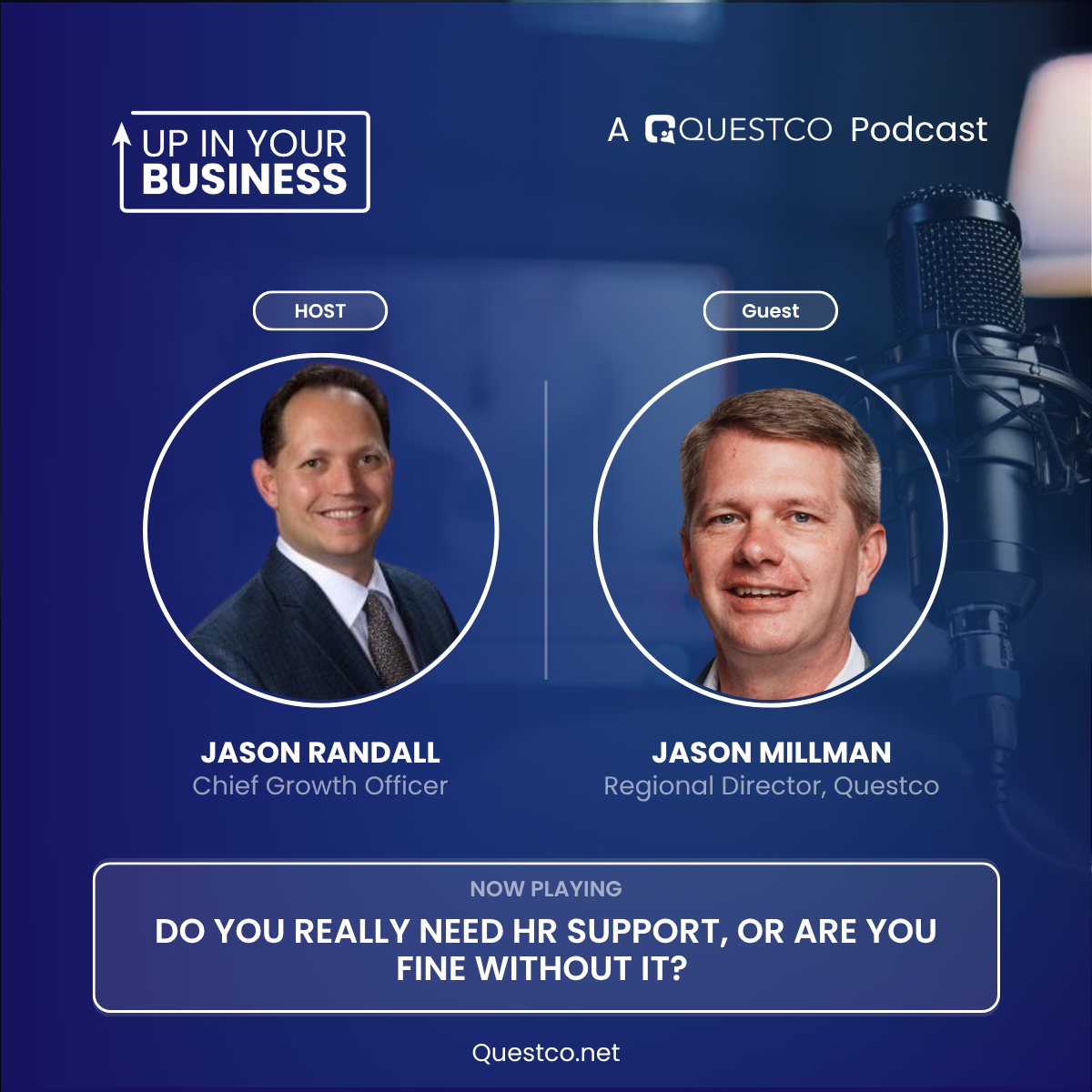
In this episode of Up In Your Business, host Jason Randall sits down with Jason Millman, Director of Client Operations at Questco, to talk about what actually happens when a growing business outgrows informal HR and what leaders can do before the cracks turn into something costly.
The conversation covers the difference between running lean and being underbuilt, how inconsistency between managers creates risk over time, what breaks down in a poorly set-up termination, and how to think about the decision between handling HR internally, using technology, or partnering with a PEO. The larger theme is one that Jason Millman has seen play out across dozens of businesses: the structure a company needs to grow well rarely shows up on its own. It has to be built.
What You'll Learn in This Episode
- What "we're fine without HR" usually means and what it doesn't
- The difference between a lean business and an underbuilt one
- Why most businesses promote for performance but don't prepare for leadership
- How inconsistent manager behavior creates employee questions, friction, and risk
- What a termination looks like when the groundwork hasn't been laid
- The three areas to address first when a business reaches the HR tipping point
- How to decide between an internal hire, a technology solution, or a PEO partner
- Why the human element in HR advice still matters and where technology falls short
• 28 min
Do You Really Need HR Support, or Are You Fine Without It? (#2)
Up In Your Business
Play
Want to follow the conversation? Subscribe to receive updates on new episodes, or click the feed to listen on your preferred platform.
Meet Your Featured Guest
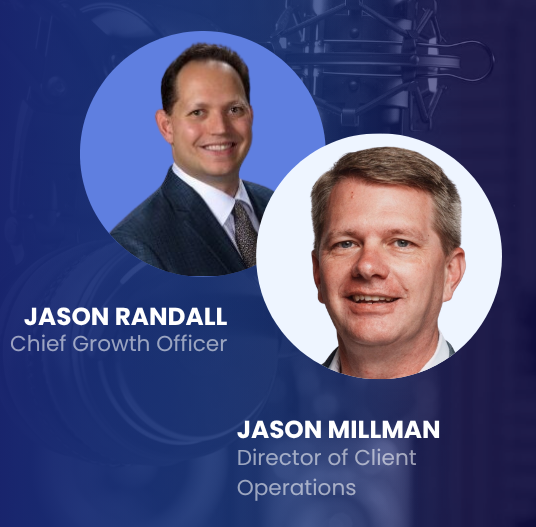
Jason Millman
Jason Millman is the Director of Client Operations at Questco Companies, where he brings deep expertise in HR strategy, talent management, and operational performance. His career spans leadership roles across PEO and HR services, including Executive Director of Talent & Organizational Development at HRMC and Director of HR & Benefits at Complete Employee Services. He is based in the Columbia, South Carolina area.
Selected Topics from the Episode
-
The "we're fine" stage — and when it ends: Jason Millman describes what running a business without formal HR actually looks like: the owner is involved in most decisions, hiring is based on instinct and relationships, and issues are handled quickly and informally. That works until the business grows to the point where the owner can't be in every decision. When managers step in without the tools, training, or follow-up to handle people decisions consistently, that's where the cracks start.
-
Lean versus underbuilt: a useful distinction: Millman draws a line between two things that can look similar from the outside. Lean means the business has made intentional decisions to stay simple but there is still clarity and consistency underneath. Underbuilt means the business is relying on individual judgment and memory instead of structure. His test: if you ask three managers how they would handle the same situation and get three different answers, the business is underbuilt. Lean will scale. Underbuilt eventually creates friction and that friction usually pulls leadership back into areas they thought they had already delegated.
-
How inconsistency becomes risk: When managers don't have the same tools, training, or follow-up, employees notice. They start asking why the same situation was handled differently depending on who they report to. That's where handbooks, policies, and clear guidelines stop being paperwork and start being protection. Without them, the business is relying on individual judgment, which is not a system.
-
What a poorly set-up termination looks like: Millman walks through a common scenario: a business knows internally that an employee isn't meeting expectations, but there was never a formal expectation set, no record of prior conversations, and the only documentation is the final event that triggered the decision. The employee is blindsided. What should have been straightforward becomes contested. The risk, Millman explains, is almost never in the termination itself but in the lack of consistency that led up to it.
-
The three areas to tighten first: When a leader reaches the inflection point and realizes the business has outgrown informal HR, Millman's recommendation is to start with three things: how you hire, how you onboard, and how you handle employee issues. Not to add layers, but to make sure managers and employees are operating from the same set of expectations, and that decisions aren't being made in a vacuum.
-
Internal hire, technology, or PEO partner: Millman frames the decision around three factors: complexity (how many employees, how many locations, how many compliance requirements), growth (whether the business is expanding faster than its HR capacity can absorb), and capacity (whether there is actually internal bandwidth to build HR infrastructure, not just react to issues). He notes that companies often hire their first HR person only to have that person spend most of their time reacting rather than building. A PEO partner model, in his view, gives businesses access to structure and expertise without requiring them to build it entirely from scratch.
-
Where technology still falls short: Both Jasons agree that technology can be a powerful tool in HR, but that AI-generated guidance (currently running at around 70 percent accuracy) isn't sufficient for the consequential, nuanced, and high-stakes decisions that people management requires. The human element—being able to walk a leader through a specific situation, anticipate how an employee might respond, and account for the full context of a business—is still something technology hasn't replaced.
Timestamps
[00:00] Welcome to Up In Your Business[01:19] Jason Millman's background — small-town grocery stores and what good leadership looks like
[03:47] What "we're fine without HR" actually means
[04:08] What running informally really looks like — and why it works at first
[05:43] When the owner-centered model starts to break down
[06:29] Does the business owner notice, or does something bad have to happen first?
[07:35] Just because you can do it doesn't mean you should
[08:24] Where the strains show up first — hiring, onboarding, performance
[09:24] The voluntold HR manager — what works and when it doesn't
[11:00] Why the absence of policy is asking for trouble as you scale
[12:01] Lean by design versus underbuilt — and how to tell the difference
[14:19] Walking through a termination that breaks down
[17:33] What can happen when a termination isn't executed well
[18:41] What to do first when you realize you've hit the HR tipping point
[19:53] Internal hire, technology, or PEO — how to think through the decision
[22:46] Why an internal HR hire needs its own structure and support
[23:59] Where technology falls short in HR
[25:56] Why the human element still matters in HR guidance
[26:48] What happens when a business waits too long
[27:52] Stories from the field — when manager training actually changes things
[31:02] Closing thoughts and where to connect with Jason Millman
[33:05] Outro
A Questco Podcast:
Up In Your Business
Up In Your Business is a podcast for business leaders who are in it every day. Making decisions, managing people, and figuring out how to grow without losing control of what matters.
This isn’t theory or surface-level advice. Each episode tackles the real challenges leaders face, from navigating HR and compliance to building strong teams, improving performance, and making smarter operational decisions. The focus is on what actually works in the real world, and what doesn’t.
If you’re responsible for driving results while also taking care of your people, this podcast gives you practical insight you can use right away.
Meet Your Host
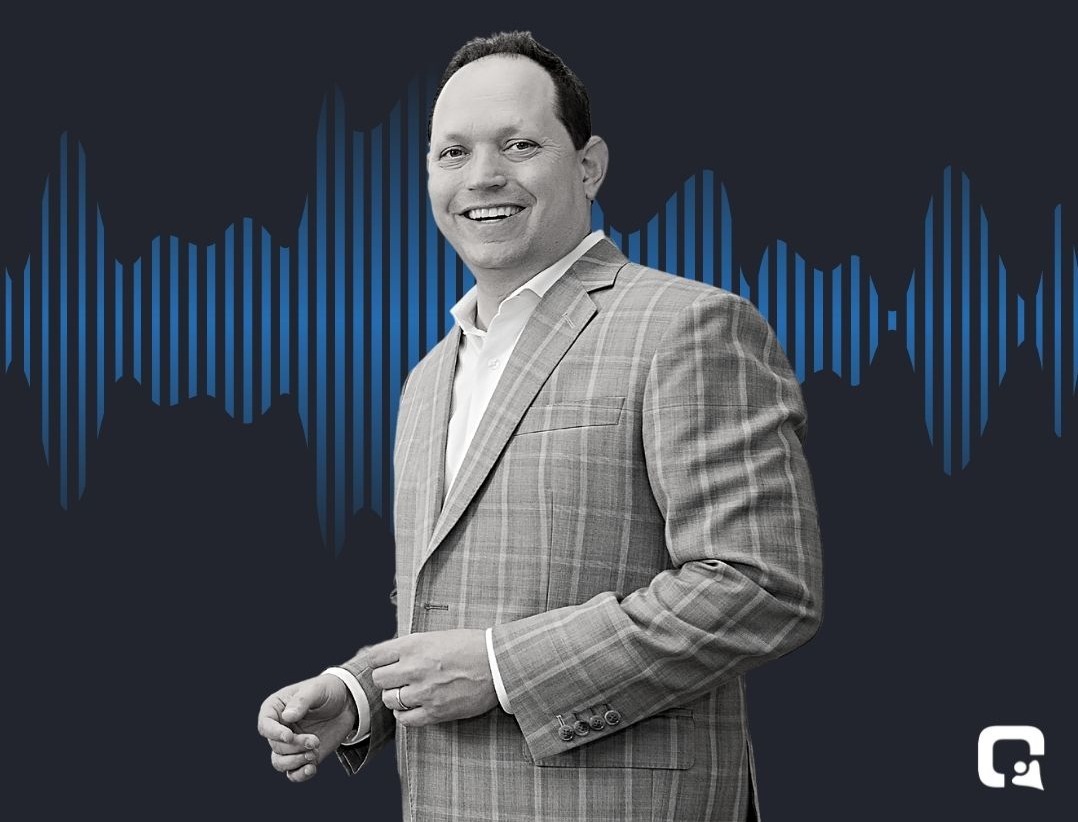
Jason Randall
Jason Randall served as CEO of Questco, a Houston-based HR outsourcing company known for its can-do spirit and award-winning customer service, beginning in 2018. Today, as Chief Growth Officer, he continues to bring a practical, business-first perspective to the conversations shaping today’s workplace.
On Up In Your Business, Jason explores the real challenges leaders face every day—balancing people, performance, compliance, culture, and growth. His approach is grounded, straightforward, and focused on what actually works.
With an emphasis on clarity and real-world application, Jason leads conversations that cut through complexity and give business leaders the confidence to make smarter decisions.
Read Full Transcript
Jason Randall (00:00)
The decision to seek HR support is usually not formal or even particularly clear. It happens when payroll gets handled by someone reliable, benefits are figured out as they come up, policies are written up and live in a folder somewhere. In other words, the business gets by. It's small, it's nimble, it's growing. Managers solve their people problems case by case, and for a while, that can seem fine.
And then the business grows and hires more people — and gets more complex. With more employees come more questions, more compliance requirements, more pressure on leaders and managers to handle situations they were not necessarily trained for.
So this episode is about that tipping point. What happens when HR support becomes something the business really needs? What starts to happen when it doesn't get that support? And how can leaders tell the difference between normal growing pains and a system that is starting to crack?
So with that, I wanted to introduce an expert in this space — someone who has guided a large number of organizations through a transition toward greater support and toward greater success. Jason Millman, welcome to the conversation.
Jason Millman (01:19)
Thank you, Jason. I appreciate it.
Jason Randall (01:21)
Well, it's our pleasure to host you. I hope you could start by telling us a little about yourself and how you came to this line of work.
Jason Millman (01:28)
I've always had a lot of respect for people who run businesses. I grew up in a small town and my parents managed a local grocery store. They didn't own the business, but it was owned by a wonderful family, and what stood out to me was how much the family cared about their employees and their customers. You could see it in how they treated their people. So that was really my first exposure to business — not from a strategy standpoint, but from a service standpoint. I got to see what it meant to take care of people, what it meant to really know your customers, and how important a single business can be to a community.
That shaped how I view business owners. I've always had a lot of respect for people who start and run businesses, because they're not just building something for themselves. They're creating jobs for other people, supporting families, and contributing to their communities.
As I got into my career, I had the opportunity to work for a phenomenal business owner who really lived that out. He cared deeply about his employees, he cared about his customers, and he understood that the way you lead people matters. What stood out to me is that he didn't expect his leaders to figure things out on their own. He made sure they had the tools, the training, and the support they needed to manage people well. And I got to see firsthand what that looked like — more confident managers, more consistent decisions, and just a better experience for employees overall.
As I got further into my career and worked with other business owners, I noticed that many of them are incredibly strong in what they do, but the people side of the business can get complicated quickly. Not because they don't care, but because that's not why they started their business. For well over a decade, a lot of what I focused on is helping bring structure, clarity, and support to that side of the business, so that they can keep growing without getting pulled into areas they were never really prepared for.
Jason Randall (03:47)
That's a great insight — that the desire is a prerequisite, but not sufficient to really have the results show up. In other words, execution depends on taking some tangible steps. So I wanted to get more specific with you. When leaders say, "we don't really have HR support, but we're fine" — what does that really mean to you?
Jason Millman (04:08)
Well, it normally means that nothing has gone seriously wrong yet. So they're hiring, they're paying people, they're handling issues as they come up. And from their perspective, everything's working just fine.
To be fair, most business owners don't start a business because they're excited about HR. Whether it's a medical office, a manufacturing company, or anything in between, they start it because they're passionate about what they do and they feel like they can create an experience for their customers that's one of a kind. So HR just happens to show up along the way, and a lot of times they're not prepared for it when it does.
At the beginning, running fine without HR usually looks like this: the owner is involved in most decisions being made, hiring is based on instinct and relationships, issues are handled informally and quickly, and there's kind of an unspoken understanding of how things operate in that business. Because everything is so centralized, it actually feels very efficient.
Jason Randall (05:27)
So the answer to my next question is sort of implied by your insight — that everything runs through the owner initially. But at what stage does that approach start to break down?
Jason Millman (05:43)
Well, it starts to break down when the business grows to the point where the owner can't be involved in every single decision. Now you've got managers stepping in, and most of those managers are there because they've earned the trust of the business owner — not because they've been formally trained to manage people. It's kind of a talent-over-training situation.
What I've seen is that for someone to be successful in any role, they need three things: tools, training, and follow-up. That applies to every employee — and it applies to managers too. When managers don't have those things, especially around people decisions, that's where inconsistency starts to show up.
Jason Randall (06:29)
Is it like the frog being boiled? Does the business owner start to notice this happening, or does something bad happen that forces a look in the mirror?
Jason Millman (06:47)
Yeah, it's kind of one of two things. If you're really in tune with your business, then when everything starts to feel just a little bit harder than it should, that's usually the business telling you that you've outgrown the "we'll handle it as we go" approach to HR. But most of the time, it's after something happens — a termination that gets challenged, an employee saying "that's not how it was handled for someone else," or leadership realizing they don't have the documentation to support a decision they want to make. That's usually when it starts to click for them that it's not just about handling this one situation — it's about how consistently they've been handling every situation.
Jason Randall (07:35)
I think something else I've heard a lot is that just because an owner can do something doesn't mean they should. It's not sufficient to say, "I could do this." The better question is: is this the best use of my time?
Jason Millman (07:55)
Absolutely. They moved into that role because they have a focus and a passion for what they want to do — but that's not necessarily managing people and making those types of people decisions.
Jason Randall (08:10)
So is there one place you've seen where the strains start to show up first? Is it payroll, benefits, employee issues? What are some stories from the field?
Jason Millman (08:24)
Well, most companies don't go from fine to broken overnight. There's a period of time where things are still working, but they're getting harder than what they should be. You start to see friction in areas that used to feel simple.
For example, a hire that doesn't work out because there wasn't a clear onboarding or expectation-setting process. Managers who hesitate to address performance issues because they're not sure how to have those conversations. Or you as a leader getting pulled back into employee issues more than you expected. It's usually not one big moment — it's a buildup of smaller moments.
Jason Randall (09:12)
And then eventually there's the straw that breaks the camel's back — and it's undeniable that help might be worth considering.
Jason Millman (09:21)
Absolutely.
Jason Randall (09:24)
A lot of small businesses have someone handling HR by default — an office manager, a finance person, even a spouse. Someone gets voluntold. What works about that for a while, and when is it no longer the right answer?
Jason Millman (09:51)
Most businesses promote for performance but don't always prepare for leadership. Those managers put in HR roles do their absolute best, but they rely on their own instincts. One manager might avoid conflict and another might address things immediately. One may document everything and another may document nothing at all.
When managers don't have the tools, training, and follow-up to be successful, employees notice very quickly. They start asking, "why was this handled differently?" And "why does one manager do this and another one doesn't?" That's where things like policies, handbooks, and clear guidelines really matter — not just as paperwork, but as a way to make sure that everyone's operating from the same playbook. Without that, you're relying on individual judgment. That's where inconsistency — and eventually risk — starts to show up.
Jason Randall (11:00)
You're onto something super important. In a business's infancy, when everything runs through the owner, policy can be made up on the fly and get you through. But as you scale and start adding employees, the absence of policy is asking for trouble — legal trouble at a minimum, but also just not operating as efficiently as you should.
Jason Millman (11:33)
Absolutely. And those gaps create friction. And where you have friction, you have risk.
Jason Randall (11:42)
At the risk of being slightly repetitive — how can a leader tell the difference between "I'm running a lean organization" and "we're underresourced and we're suffering"?
Jason Millman (12:01)
That's a good question, because a lot of businesses pride themselves on being lean. And that's a good thing. But there's a difference between being lean by design and being underbuilt.
Lean means you've made intentional decisions to keep things simple, but there's still clarity and consistency behind how the business operates. Underbuilt means you're relying on individual judgment and memory instead of any type of structure.
A simple way to think about it: if I asked three of your managers how they would handle the same situation, do I get roughly the same answer? If yes, you have a lean business. If I get three different approaches, you're underbuilt. You can see it in practical areas too. In hiring, lean means clear role expectations and a consistent interview approach. Underbuilt means every manager has their own strategy based on instinct. In performance management, lean means managers know when and how to address issues. Underbuilt means issues get ignored or delayed. In answering employee questions, lean means people know where to go and what to expect. Underbuilt means the answer depends on who you ask.
Structure comes in because clear expectations, basic policies, and a handbook aren't about adding layers — they're about making sure the business operates consistently without reinventing decisions every time. What I've seen personally is that lean will scale, but underbuilt eventually creates friction. And when that friction shows up, it usually pulls leadership back into areas they thought they had already delegated.
Jason Randall (14:19)
I love the language of lean versus underbuilt. I think that's a really clean and useful way to help a business owner assess where they actually are. So let's take a specific example that could be a flashpoint. Walk me through a termination from the underbuilt perspective — what it looks like when it breaks down.
Jason Millman (14:43)
Yeah, so usually what happens in that situation is a business has an employee that they know isn't meeting expectations, but there was never a formal expectation set. And there's no clear record of prior conversations about performance. The only thing that's documented might be the final event that led to the decision.
And so what happens is, when you sit down with that employee to let them go, the employee is caught off guard because no one ever clearly addressed the performance issues with them before. And now you're at the most critical moment — the end of the employment relationship — and there's no documentation to support how you got there. What should have been a very straightforward situation becomes something much more complicated.
So it's not the decision that creates the problem. It's the lack of consistency that led up to it. That's one of the things we coach on regularly.
Jason Randall (17:33)
And these are consequential things. What can happen when a termination isn't executed well?
Jason Millman (17:44)
It can lead to big issues. The termination can get challenged. In certain situations, you could find yourself in court — if the employee felt they weren't being held to the same standard as others, for example. It also creates a difficult situation for the other employees who witnessed it. They don't know why the person was let go, and they may start to wonder if their job is at risk too. That's why clear expectations are so important — so every employee understands what's expected of them, and no one is working in fear.
Jason Randall (18:41)
I suspect some of the audience is saying, "I resemble that remark." So when an operator reaches that inflection point, what should they do first?
Jason Millman (19:06)
One of the things you can do is start by creating consistency in a few key areas. One is how you hire. Two is how you onboard new employees. And three is how you handle employee issues. Part of that is having some basic structure in place — clear expectations, simple policies, a handbook that reflects how you actually operate. Not to overcomplicate things, but to make sure that managers and employees are aligned so they're not making decisions in a vacuum.
I would probably start with those three things: how you hire, how you onboard, and how you handle employee issues.
Jason Randall (19:53)
The means to do that can look different. A company might hire internally, use a technology-only solution, or partner with an organization like Questco. How do you contextualize that decision?
Jason Millman (20:17)
I would look at three things when deciding whether to handle it internally or go with an outside model.
First, complexity. How many employees do you have? Are you in multiple locations? Are you dealing with different types of roles or compliance requirements? A 15-person team in one location is very different from a 75-person team across multiple states with managers making independent decisions.
Second, growth. If the business is growing quickly, the people side changes fast — hiring, onboarding, new managers, new issues. Growth exposes your gaps. What worked for 10 employees doesn't work for 35 to 50.
Third, capacity. Do you actually have the time and internal expertise to build this out? Because building HR internally isn't just hiring one person — it's creating systems, training managers, maintaining consistency, keeping up with compliance, and supporting the business as it continues to evolve.
What I've seen is that companies hire their first HR person, but that person spends most of their time reacting to issues instead of building the structure the business actually needs. That's where a partner model like a PEO can make sense — it allows businesses to access structure, expertise, and support without having to build it all internally right away. It's not really a question of which model is better. It's a question of what the business needs right now, and how they want to scale that capability over time.
Jason Randall (22:46)
You mentioned something incredibly vital and often overlooked — that the decision to make an internal hire can be wonderful, but it requires forethought, structure, and investment. It's not enough to bring someone in if they're unarmed to the needs of the business. They end up very tactical at a very expensive price point.
Jason Millman (23:32)
Absolutely. I get the question all the time: "Does my business need a full HR team?" And the answer is: not necessarily. What you need is capability. Some businesses build that internally. Others choose to partner with a company like Questco to get that expertise, structure, and support without having to build it all themselves. It really comes down to how they want to scale that part of their business.
Jason Randall (23:59)
You mentioned there are some compelling technologies out there. But in your view, what are the hallmarks of when technology might not get the business where it's looking to go?
Jason Millman (24:16)
I just don't think we're quite there yet. I've worked with business owners on a regular basis, and while many situations look similar, every situation is different. Technology, from an HR standpoint, doesn't always have the ability to understand all of those fine points, take everything into consideration, or factor in feedback from other members of the team to arrive at the best answer.
Jason Randall (24:52)
It's something I've observed too. On the HR advice-giving side of what we do, we're trying to help people move from confusion into confidence. An AI-generated response to a situation always looks great and sounds very good. But we have to appreciate that while AI tools and technology generally can be very helpful, AI is only about 70 percent accurate. And I wouldn't be comfortable with a 70 percent accuracy rate on things that are consequential to my business — handling a sensitive HR issue, understanding the legal requirements to operate in a particular state. I think that's something that gets overlooked as we rush to embrace new technologies. It can be transformative. And the human element, the expertise that can be provided, remains an essential part of what we do.
Jason Millman (25:56)
Yeah, I want to talk to someone who is going to be able to walk me through this conversation — to know what to say, what to avoid, and also talk about what some of the possible reactions might be. And not just "here's the conversation you need to have" — but also, is this employee ready to receive the information I'm going to give them? These are things we talk about with business leaders and owners regularly: when do you plan on having this conversation, and what does that look like? Here are some possible ways it can go, and here's how you might respond in each scenario. I love that personal, human touch that our people are able to provide.
Jason Randall (26:48)
Sure. And what do you see out there in terms of what happens when a business or owner waits too long to move from owner-centered decision-making to investing in an outside resource, a technology, or a team? What are some of the consequences of waiting too long?
Jason Millman (27:12)
Well, it can create really expensive messes. Usually around hiring and terminations — that's where it really costs people. Hiring quickly without structure leads to a lot of turnover. Letting issues go on too long creates even bigger problems. And terminating without documentation or consistency creates a ton of risk. Those are the areas where waiting too long really starts to show up.
Jason Randall (27:52)
I don't think we want to leave the audience on gloom and doom, because there's so much room for optimism — and so much power in what good HR advice can do for a business. So I was hoping you could share some of the stories you're proudest of when it comes to helping a business succeed through your expertise.
Jason Millman (28:21)
I've got a lot of them. One I'm probably most proud of is working with a company that was growing quickly. They had great people, strong leadership, and they were starting to feel the strain of the people side of the business. Managers were handling things differently, leaders were getting pulled back into employee issues, and what used to feel simple was suddenly taking more time and more energy.
We didn't have to overhaul everything. We just focused on a few key areas — helping managers understand how to handle employee situations consistently, providing them with the tools to be successful, and teaching them how to turn tough discussions into productive conversations. The idea is that the best companies are the ones having productive conversations with their employees. Anyone who's a parent knows this: the people you care about most are your kids, and you have productive conversations with them all the time — not because you want to fire them, but because you know they have potential and you want what's best for them. Managers can approach their employees the same way.
After one of those training sessions, one of the gentlemen came up to me afterward. He said, "I'm 46 years old, and no company has ever gotten this information to me before. I've been managing people for 20 years, and this is the first time someone took the time to explain this to me." There was a bit of a tear in his eyes. Those are great days.
When you know that walking a business owner or manager through those conversations — so they're comfortable and confident — is only going to make them want to go out and have more of those conversations, and get better at it. And you know it's going to make that business better and the experience better, not just for that manager, but for every single employee and ultimately every customer they come in contact with.
Jason Randall (31:02)
You have a ton of respect for the way you approach your own advice-giving, because we work with very smart, accomplished, successful people who simply need help and support to become even more so. Your demeanor and acumen are to the benefit of the clients we serve. So I thank you not only for your participation here today, but for the great work you do on behalf of our clients and their people every day.
Jason, when our audience wants to get in touch or learn more, how can they connect with you?
Jason Millman (31:38)
They can find me on LinkedIn — Jason Millman — and reach out to me through there. I'm happy to work with other businesses and share information on how they can help grow and scale their business.
At the end of the day, most business owners didn't start their business because they wanted to manage HR. They started because they believed they could build something meaningful. I've always had deep respect for that. The people side of the business is a big part of that responsibility, and I hope people understand that every business is making people decisions whether they have HR or not. The difference is whether those decisions are supported with the right structure. Because when you get that part right, you're not just reducing risk — you're creating an environment where people can really succeed, where managers can lead with confidence, and where businesses continue to grow the way they were intended to. I appreciate the opportunity to talk today.
Jason Randall (33:05)
Jason, thank you so much for sharing your perspective today.
And to our audience — thank you for tuning into this episode of Up In Your Business. If this conversation helped you think more clearly about whether your business has outgrown DIY HR and is ready for more support, please share this conversation with a founder, operator, or manager who is feeling that pressure right now. You can find more resources and more episodes in the show notes, and we'll see you next time.